













To go back to “A Room of One’s Own” - any social or psychological condition, says Woolf, that blunts the creative mind is an impediment to creation. She concludes, quoting Coleridge, that the greatest minds are androgynous -‘ a mind that is purely masculine cannot create any more than a mind that is purely feminine’ and it isn’t a mind that takes up the cause of women or devotes its time to their interpretation.’ ‘Perhaps an androgynous mind is less apt to make these distinctions than the single-sexed mind.’ She points out writers she doesn’t like - such as Galsworthy who have ‘not a spark of the woman in them’ and so no ‘suggestive power.’ She’s funny on Proust who has a “little too much of the woman. But that failing is too rare for one to complain of it.”
I think she’s right on creative androgyny. The very masculine world of Raymond Carver for instance incorporates a physical, maternal tenderness for his characters, (if it isn’t outdated to equate tenderness and maternity). Today women writers create real male characters from the inside compare the men in Toni Morrison’s ‘Song of Solomon’ to Charlotte Brontés Mr Rochester or Darcy in ‘Pride and Prejudice.’
Where I part company with Woolf is in her irritation with what she call “sex-consciousness” that she sees as closeting each sex in anger or for men the constant need to assert their superiority out of fear. How can she rail as she does against “the suffrage movement” which she says has a lot to answer for? Or go as far as to say that Shakespeare wouldn’t have written like he did if there had been women suffragettes around in the sixteenth century....Should we blame her for these blind spots? What about that comment that she hoped that women in the future would get beyond making their books ‘a dumping ground for their emotions.’ An odd, guilt-making, (self-disliking?) comment from a pre-modern feminist thinker and precursor of woman’s writing. “And don’t women just have emotions to dump,” snapped a screen-writer friend acerbically when I quoted her this comment – she had just heard on the radio that only fifteen years ago women were allowed into the Viennese Philharmonic Orchestra and that ‘even then the event had caused an uproar.’
“A Room of One’s Own” came out in 1929. Basically, like Freud, Woolf was a creature of her time, despite all that sensitive genius. Isn’t blaming her like taking nineteenth century doctors to task for letting so many women die of puerpural fever in childbirth because they hadn’t a clue about bacterial infection? I suppose there’s a case to be argued here, though personally I’ve never believed that awareness of human equality could be excused on the grounds of lack-of-education. In other words, ignorance, or any other extenuating circumstances. The truth is there in the heart, that woman or man could be me. Most likely Woolf like all of us was afraid of what she couldn’t imagine herself coping with – that rough red housemaid’s complexion from getting up every day at five thirty to clean grates and get the household fires going to provide everyone else’s hot water. Or the desperate anger of a woman trapped without any legal rights at all - in a loveless, seemly, bourgeois marriage – a woman for whom chaining herself to a public railing to win the right to vote would be an emblem of release. Woolf was certainly not as free to act and speak out as we are today - if we use that freedom - but the ‘alternative’ freethinking, freeloving milieu of the Bloomsbury set certainly gave her the space to think and express herself as she wished.
Tuesday, January 13


writing women
But let’s end on reasons for reading ‘A Room of One’s Own.’ Even today nearly a hundred years later she sounds sharp on the psychology of the sexes. I guess they spent a lot of time talking about that over their cigarette-holders in the drawing rooms of Bloomsbury (and congratulating themselve on being trailblazers. Though she does complain that even one of the nicest, most enlightened men from her bohemian circles can’t take it when he reads a line in a Rebecca West novel referring to men as snobs - he blurts out - “ arrant feminist!”
“Women have served all these centuries as looking glasses” I think this would sound very out of date to my daughters! Clearly what she says about power -sharing in relationships is nolonger just about men and women today but any combination of personalities in which one accepts to reflect the other, trapping both in this “the looking glass vision..that charges the vitality..(...). stimulates the nervous system”
Nevertheless the best reason to read ‘A Room of One’s Own’ is to hear Woolf on the writing process. Not many women writers today talk about writing this way, so prosaically in relation to the everyday routine of life. I love what she says about adapting yourself to interruptions...‘for interruptions there will always be..’ - and this is speaking as a childless woman, though one who openly regretted that fact all her life. Her strange childlessness that the feminist commentators have always noted as a wound inflicted by doctors who decreed that she was not mentally stable enough to bear pregnancy and childbirth. You wonder why she didn't just get pregnant anyway if that was what she longed to do - instead of listening to the professionals whose patriarchal attitude she decried so consistently in her writing. It's worth remembering her comments feel sharp and dry as they often do, she was living on another planet in terms of how people reacted and perceived each other’s rights as human beings. Not only women - any reading of male biographies of the time that include a description of the public school system as for example in Roald Dahl’s ‘Boy’ is a shocking revelation of the sadistic hierarchy taken for granted. So Woolf was working light years ahead of her time when she referred to a book as a psycho-somatic entity and said that one written by a woman has somehow to ‘adapt to the body’ by which she means it (book not body) should be thinner, more concentrated since women with their everlasting multi-tasking tend to work in fits and starts. Women writers must find and accept for themselves “the alternations of work and rest they need, interpreting rest not as nothing doing but as doing something but something that is different and what should that difference be?” All very wise and gentle and applicable today caught up as we are in an endless valorising of productivity. We mustn’t keep comparing she says too. All this constant measuring up of yourself blocks creativity,
“all this pitting of sex against sex and quality against quality; all is claiming of superiority and imputing of inferiority belong to the private school stage of human existence where there are ‘sides’ and it’s important for one side to beat another.”
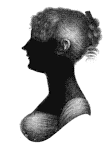
When she talks about Jane Austen she's thought-provoking too for anyone writing or painting or struggling with any creative project today. Everyone knows Austen’s own self-effacing reference to her ‘art of miniature’ her ‘two inches of ivory’ about her writing - as her nephew says in his memoir, ‘in the general sitting room subject to all kinds of casual interruptions,’ how she was glad that a hinge creaked so that she covered up what she was doing with blotting paper. Would she have written better novels, wonders Woolf, if she hadn’t been so intent on covering up what she was doing? She looks into ‘Pride and Prejudice’ to see if she can fault its narrowness but can’t find anything,
“That perhaps was the chief miracle about it. Here was a woman about the year 1800 writing without hate, without bitterness, without fear, without protest, without preaching. This was how Shakespeare wrote, .(..) the minds of both had consumed all impediments...(...)for that reason Jane Austen pervades every word she wrote and so does Shakespeare. If Jane Austen suffered in any way from her circumstances it was in the narrowness of life that was imposed upon her. It was impossible for a woman to go about alone. ...But perhaps it was the nature of Jane Austen not to want what she had not. Her gift and her circumstances matched each other perfectly.”
Hmm. Woolf has an almost Buddhist approach to the toxicity of anger in conflict. My first reaction was to dismiss this attitude as very British stiff upper lip approach, that victorian drawing room training that all the great twentieth century revolutions broke with by revindicating first and foremost the right to be angry. However, when you argue angrily says Woolf, like men are angry with women, the listener hears not so much the argument as the personal reaction of anger and then responds in kind.
Turning this over in my mind I thought about a middle-aged Iranian dissident I know from contact with the disaspora here, who has spent his life in and out of prison. A writer and historian who continues to produce texts despite nearly losing his eyesight and suffering so much from broken health. This man and some women dissidents too whom I’ve met, behave with an immutable, stolid attitude of resistance. No satire, or vindictive railing, less hatred than enormous confidence and patience. A philosophic approach to the enemy, understanding his defects of education, by which Woolf meant their being raised to go to war when need be, or to make money and more money “when it is a fact that five hundred pounds a year will keep one alive in the sunshine.”
I guess that’s the trick, the more you understand, the more easily you cast off the need for anger, fear and bitterness.
But by far the best moment of all from ‘A Room of One’s Own’ comes at the end where she’s standing in front of a shelf of woman writers - the selection goes from Aphra Benn to the jewel in the crown – Jane Austen - then the Brontés and the other Victorians who had to take mens’ names to get published...and that’s all. She has no idea you think gleefully, of all the wealth that lay ahead, the endless opening out and kicking aside of restraints. Just the most rapid glance up at my bookshelf takes in a huge explosion in the mind, in English alone ; E. Annie Proulx, Jeanette Winterson, Nadine Gordimer, Toni Morrison, Carol Ann Duffy, Doris Lessing, Sylvia Plath, Jane Gardam, Anita Desai, Monica Ali...and on and on.
What luck to be alive now, in what she calls ‘the twilight of the future’.
Subscribe to:
Posts (Atom)
